
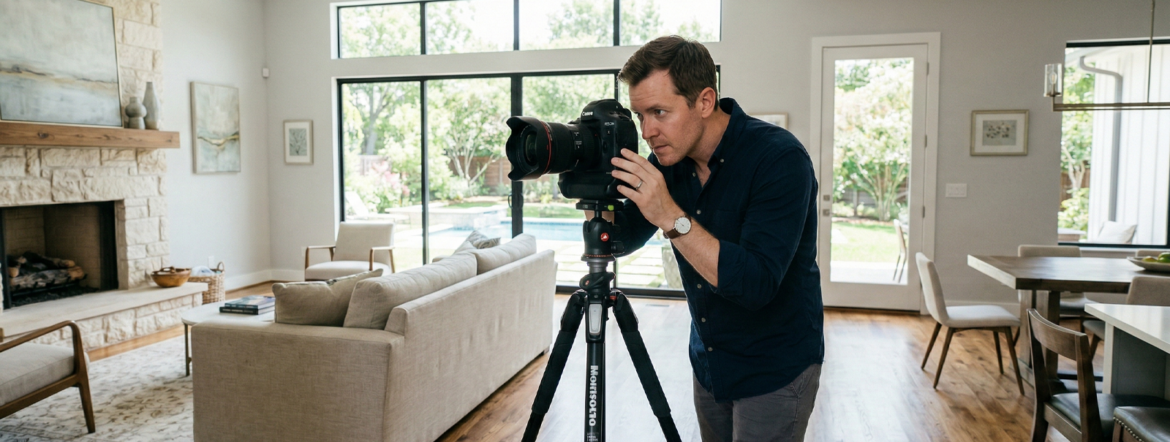
The Canon 16×35 mm is widely considered the “holy grail” for real estate photographers, and for good reason. When you walk into a property, your primary goal is to translate a three-dimensional space into a two-dimensional image that feels both spacious and accurate. This lens provides the technical precision required to make that happen without the “fisheye” distortion that plagues cheaper wide-angle glass.
Mastering the Sense of Space
The 16 mm end of the spectrum is the sweet spot for interior work. It is wide enough to capture an entire small bedroom or a narrow galley kitchen in a single frame, providing a sense of depth that makes the viewer feel like they are standing in the room. Unlike wider 11 mm or 12 mm lenses, which can make furniture at the edges of the frame look unnaturally stretched, the 16×35 mm maintains a more realistic perspective that keeps homeowners and agents happy.
One of the most critical advantages of this lens is its handling of vertical lines. In architectural photography, if your walls look like they are leaning or curving, the photo immediately loses its professional edge. Canon’s engineering in this series focuses heavily on minimizing barrel distortion. This means when you level your camera, the door frames, windows, and corners of the room remain perfectly straight, saving you significant time in post-production.
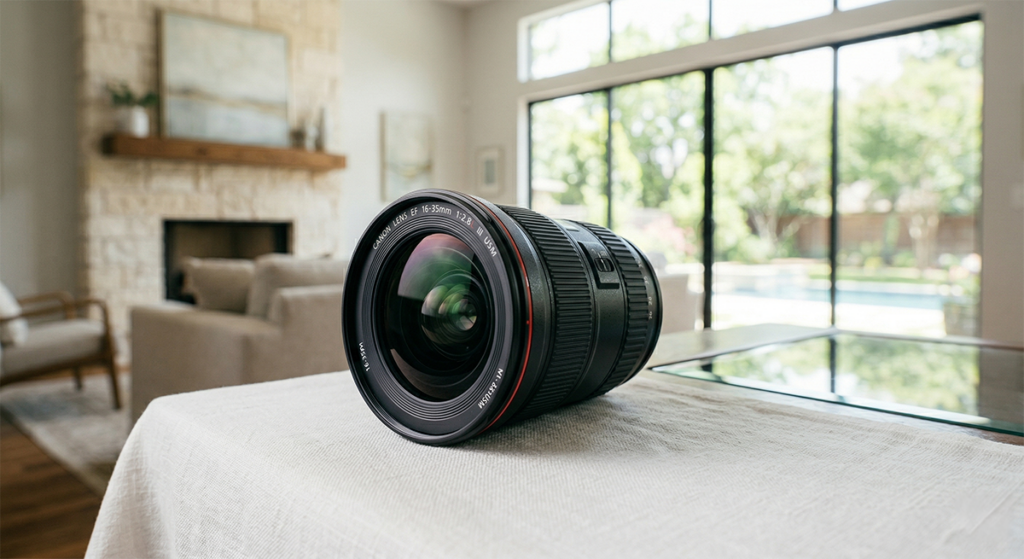
Versatility from Wide Angles to Detail Shots
Beyond the wide shots, having the ability to zoom into 35 mm is a major workflow advantage. While 16 mm captures the “big picture,” 35 mm allows you to quickly pivot and shoot “vignette” or detail shots, such as a close-up of a high-end faucet, the texture of a granite countertop, or the view through a window, without needing to swap lenses and risk getting dust on your sensor.
Finally, the build quality of these lenses ensures they can handle the grind of a busy shooting schedule. Because they are part of the professional line, they feature advanced coatings that help manage “ghosting” and “flare.” This is vital when you are shooting directly toward bright windows, a scenario that occurs in almost every real estate shoot. It ensures that the view outside remains clear and the interior colors stay vibrant and true to life.