
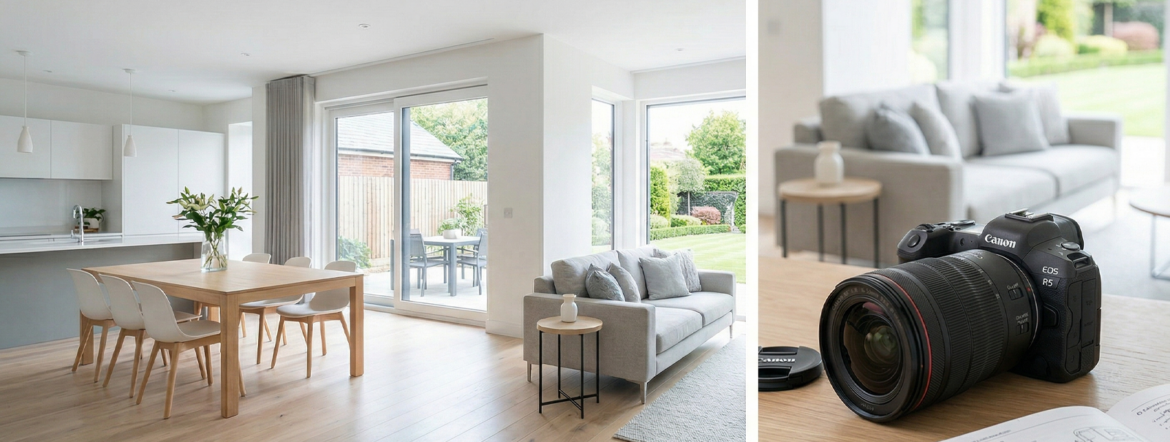
Real estate photography is one of those genres where your gear choices directly affect how a property feels to the viewer. You’re not just documenting a space, you’re shaping perception. The goal is simple: make rooms look open, balanced, and inviting without crossing into unrealistic distortion. That’s why lens choice matters so much, and why many professionals eventually move to full frame cameras.
When it comes to Canon lenses, the sweet spot for real estate is always in the ultra wide to wide angle range. Something like the Canon EF 16-35mm f/4L IS USM is a classic for a reason. It’s sharp across the frame, keeps distortion under control, and gives you enough flexibility to shoot both tight interiors and slightly wider exterior scenes. It’s not the flashiest lens, but it’s reliable, and reliability is everything when you’re shooting multiple listings in a day.
If you’re working with a crop sensor camera, the Canon EF-S 10-18mm f/4.5-5.6 IS STM is one of the easiest recommendations to make. It’s lightweight, affordable, and gives you that wide field of view you need to capture entire rooms. It doesn’t have the same build or edge to edge sharpness as Canon’s L series lenses, but for many photographers starting out, it’s more than enough to produce clean, professional looking images.
For mirrorless users, Canon has been building out solid options as well. The Canon RF 15-35mm f/2.8L IS USM is more of a high end choice, but it delivers exceptional image quality and handles low light interiors with ease. It’s the kind of lens you invest in when you’re shooting higher end properties or doing commercial real estate work where consistency and detail really matter.
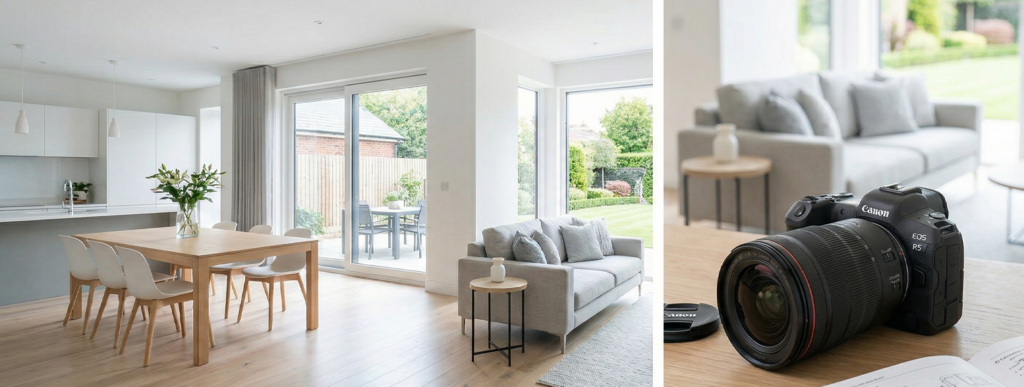
Why Full Frame Makes a Difference
All of these lenses can get the job done, but the camera behind them plays a bigger role than most people expect. Full frame cameras have a clear advantage in real estate photography, and it starts with field of view. On a crop sensor, your lens is effectively zoomed in, which makes it harder to capture an entire room without backing into a wall. Full frame lets your wide angle lenses actually behave like wide angle lenses, and that extra space in the frame makes a noticeable difference.
There’s also the matter of image quality. Real estate scenes often have challenging lighting, bright windows, darker interiors, and mixed color temperatures. Full frame sensors handle this better by capturing more detail in both highlights and shadows. That means less time fixing blown out windows or muddy corners in editing, and more consistent results across a shoot.
Another subtle but important difference is how natural the images feel. With full frame, you don’t have to push your lens to extreme focal lengths as often, which helps avoid that stretched, exaggerated look on the edges of a frame. Lines stay straighter, proportions feel more accurate, and the final images come across as clean rather than gimmicky.
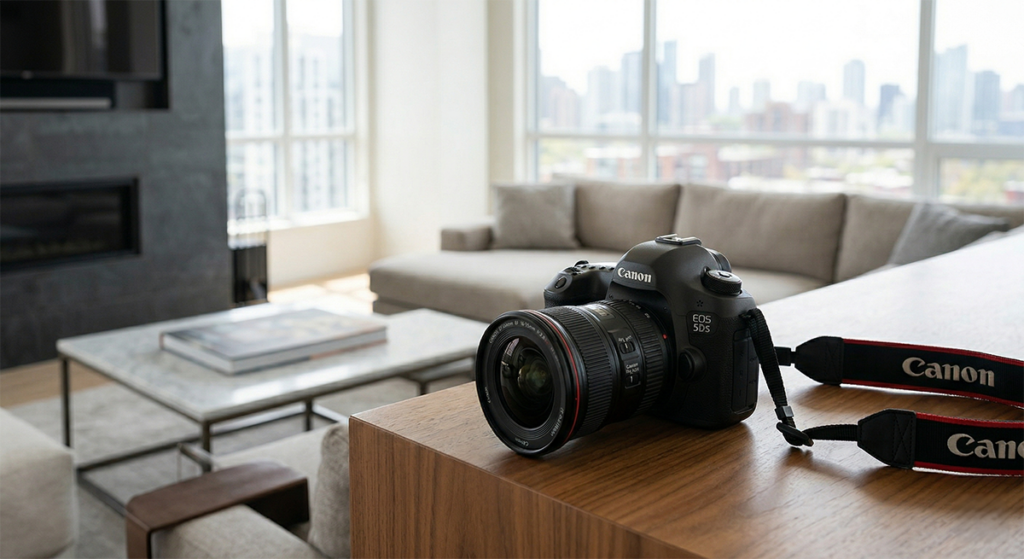
Bringing It All Together
That said, crop sensor cameras aren’t useless here. Plenty of photographers use them successfully, especially when paired with the right ultra wide lens. But as you start aiming for higher end clients or more polished results, the benefits of full frame become harder to ignore.
In the end, real estate photography is about consistency and clarity. A good wide angle lens gets you most of the way there, and a full frame camera helps refine the result. Put the two together, and you get images that not only show a space, but sell it.